

Introduction
You spent the afternoon baking, and by day two the cookies are dry, or worse, they’ve gone soft and lost their edges. Knowing how to store homemade cookies is the difference between a batch that lasts a week and one that’s disappointing by Tuesday. The right method depends on the kind of cookie you baked, so this guide covers what to do with soft cookies, crisp cookies, decorated cookies, and how to freeze both dough and finished cookies for later.
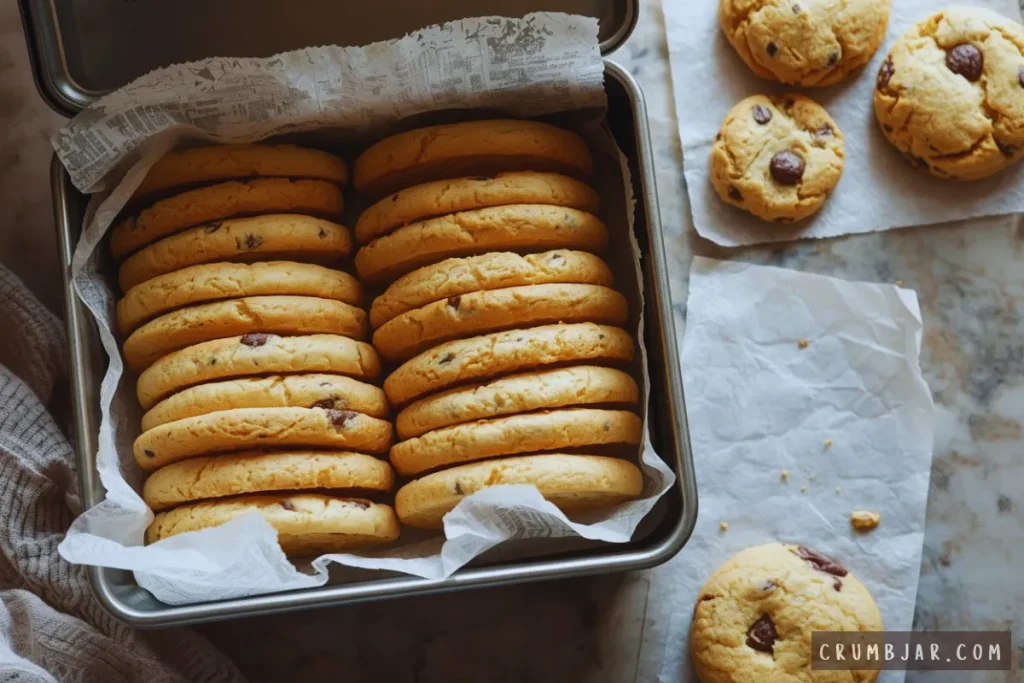
Why Cookies Go Stale
Cookies change texture because moisture moves. Soft cookies lose moisture to the air and dry out. Crisp cookies absorb moisture from the air and go limp. That’s the whole problem, and it explains why one storage method doesn’t work for every cookie.
It also explains the most common storage mistake: putting soft and crisp cookies in the same container. The crisp ones pull moisture from the soft ones, and you end up with two batches that are both wrong.
Store Soft Cookies With a Moisture Source
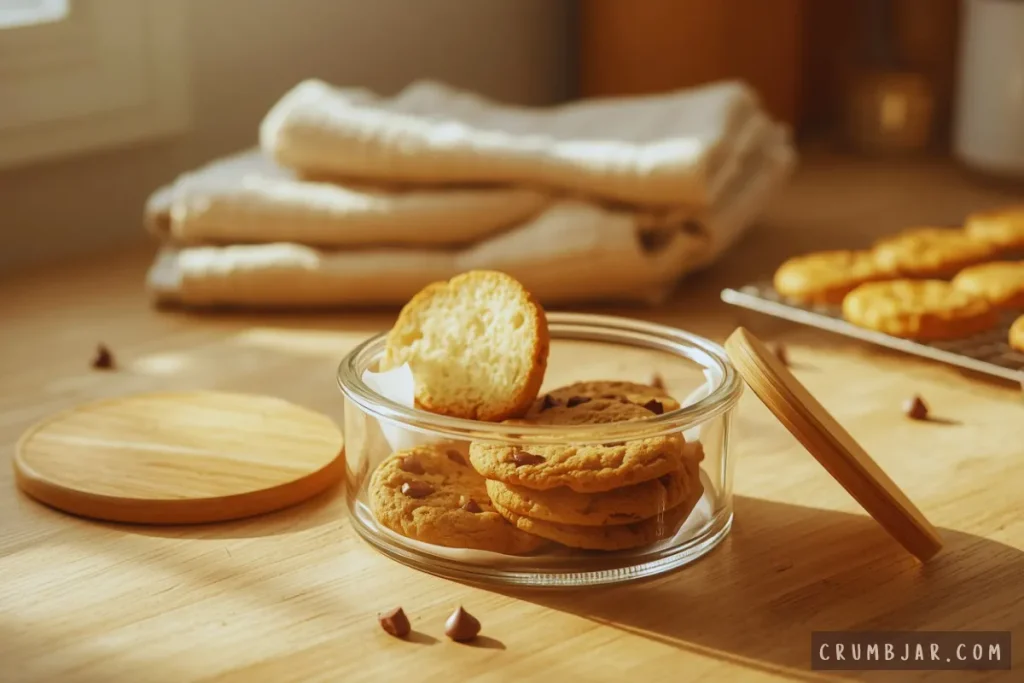
Chewy chocolate chip cookies, snickerdoodles, and other soft-centered cookies need help holding onto moisture.
Store them in an airtight container at room temperature, in a single layer or separated by parchment paper if you’re stacking. Add a slice of plain sandwich bread to the container. The cookies draw moisture from the bread instead of releasing it into the air, and the bread goes stale in their place. Swap the slice when it dries out.
Expect roughly 3 to 5 days of good texture at room temperature.
Store Crisp Cookies Dry and Separate
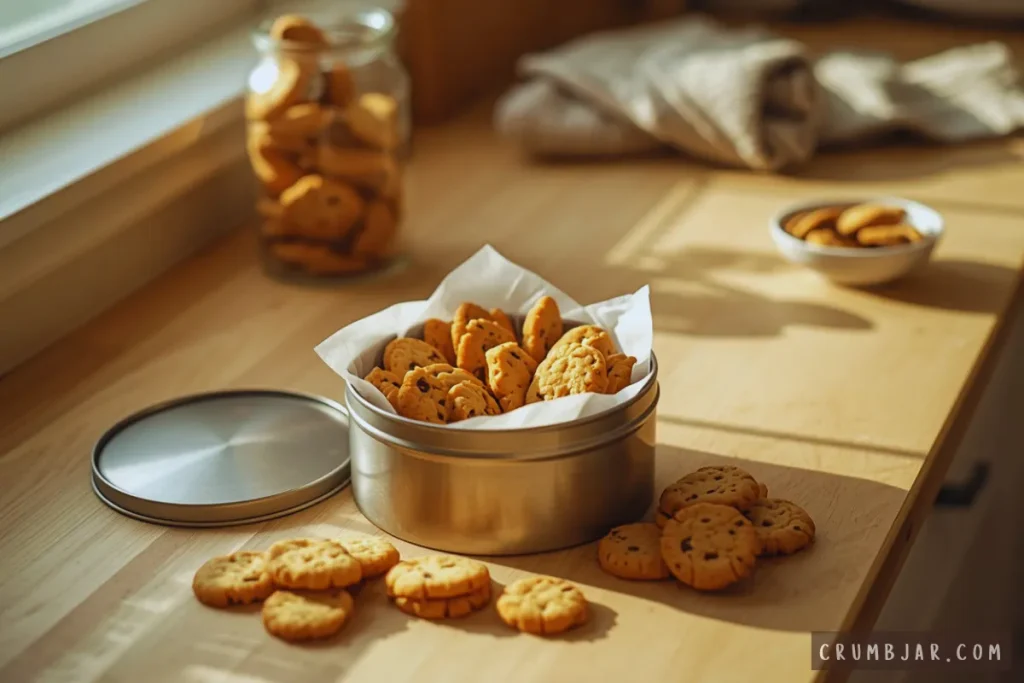
Shortbread, biscotti, thin sugar cookies, and gingersnaps need the opposite treatment. Keep them airtight, at room temperature, and keep anything moist away from them. No bread slice, and no sharing a container with a soft cookie.
If your kitchen is humid, a tin with a tight lid tends to do better than a plastic container. Crisp cookies generally hold their snap for about a week.
What to Do With Decorated or Frosted Cookies
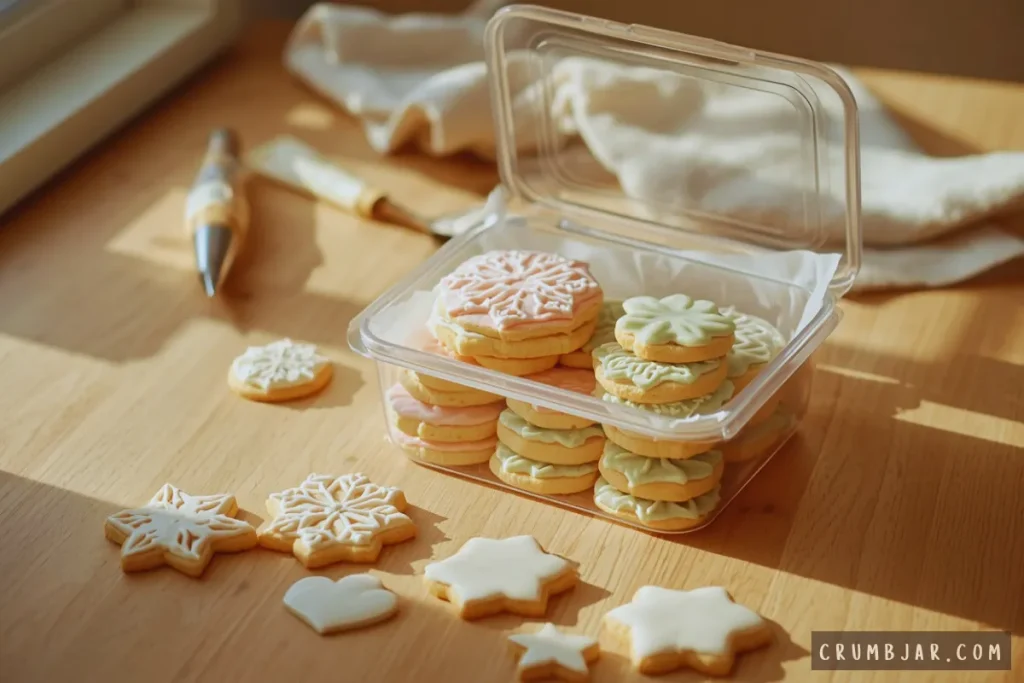
Let royal icing set completely before stacking, usually several hours, sometimes overnight depending on thickness. Stacking too early smudges the design and glues the cookies together.
Once set, layer them with parchment between rows in an airtight container at room temperature. Cookies with cream cheese frosting or any perishable filling need refrigeration instead; bring them back to room temperature before serving so the texture softens again.
Freezing Cookies
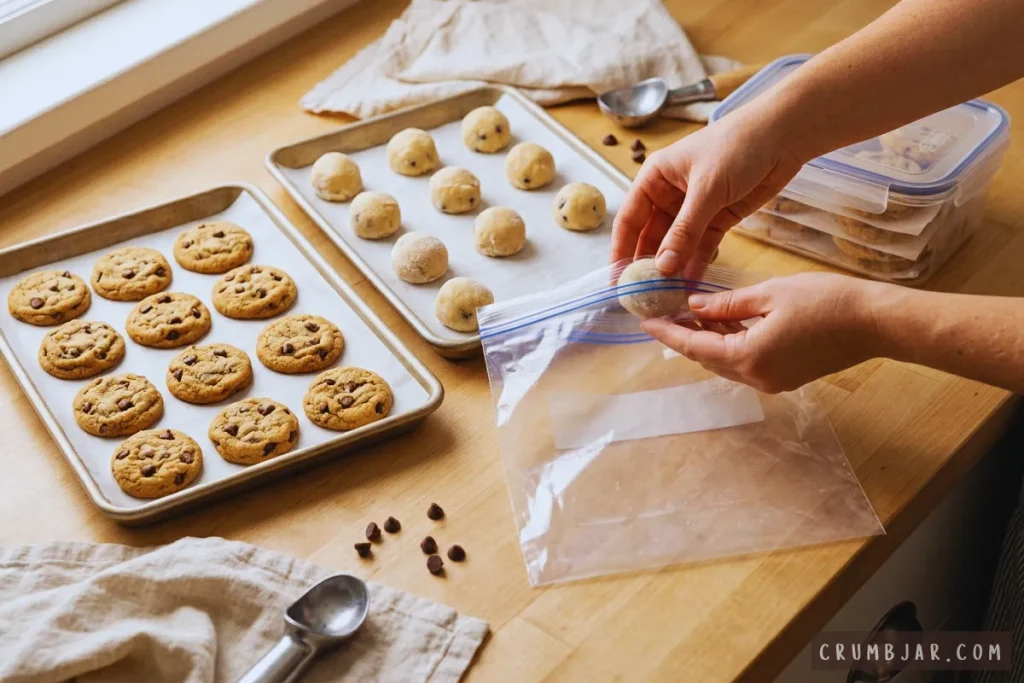
Freezing is the best option if you’re baking ahead.
Freezing baked cookies: Cool them completely first, or condensation will form in the container. Freeze them in a single layer on a baking sheet until firm, then transfer to a freezer bag or airtight container with parchment between layers. Thaw at room temperature for about 30 minutes. Most cookies hold up well for a couple of months.
Freezing cookie dough: For many bakers this gives better results than freezing baked cookies, because you get a freshly baked cookie whenever you want one. Scoop the dough into balls, freeze them on a tray until solid, then bag them. Bake straight from frozen and add a minute or two to the bake time.
Quick Storage Guide
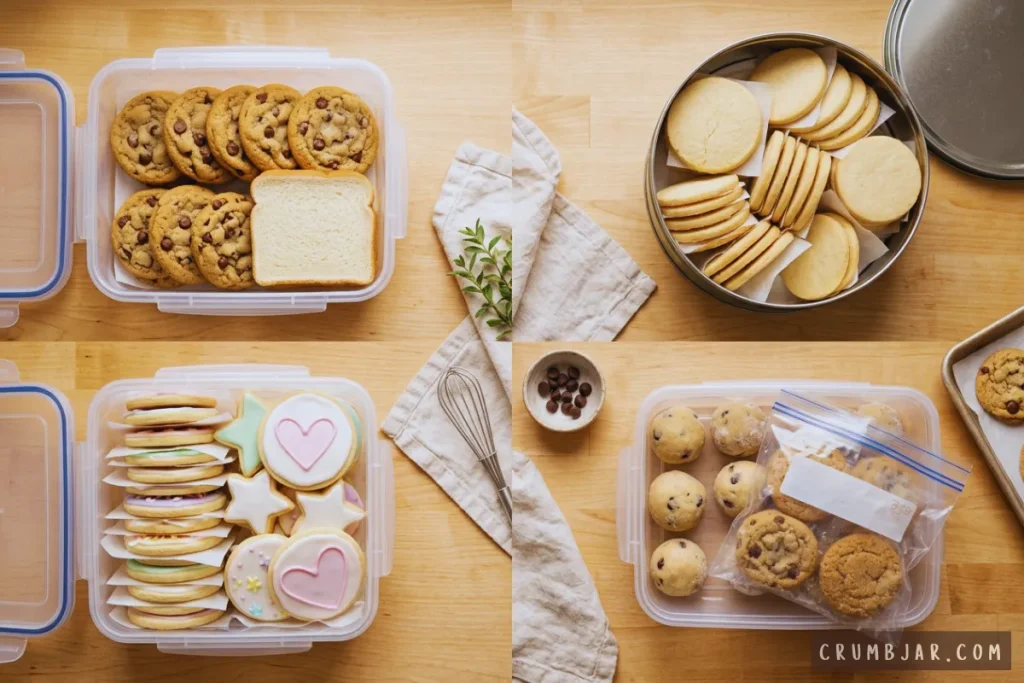
- Soft cookies: Airtight, room temperature, bread slice, 3 to 5 days.
- Crisp cookies: Airtight, room temperature, nothing moist nearby, about a week.
- Frosted with royal icing: Let set fully, layer with parchment, room temperature.
- Cream cheese or perishable frosting: Refrigerate, serve at room temperature.
- Longer storage: Freeze the dough or the baked cookies.
Looking for the ultimate guide to slice-and-bake cookies? Check out The Ultimate Guide to Slice-and-Bake Cookies for delicious cookie ideas and helpful baking tips.
Frequently Asked Questions
- Should I refrigerate homemade cookies? Usually no. The refrigerator dries most cookies out faster than a counter container does. Refrigerate only when there’s a perishable frosting or filling involved.
- Does the bread slice trick actually work? Yes, for soft cookies. The bread gives up its moisture to the cookies. Use plain white sandwich bread so it doesn’t add flavor, and replace it once it hardens.
- Can I store different kinds of cookies together? Only if they share a texture. Soft with soft, crisp with crisp. Mixing them means the crisp cookies soften and the soft ones dry out.
- How do I revive cookies that have already gone dry? Warm them in a 300°F oven for 3 to 5 minutes. It won’t fully restore them, but it softens the interior and helps for the same day.
- Is it better to freeze dough or baked cookies? Dough, in most cases. Baking from frozen gives you a cookie that tastes freshly made, which frozen baked cookies never quite match.
Conclusion
Most cookie storage problems come down to one question: does this cookie need to hold moisture or keep it out? Answer that, keep textures separated, and use the freezer when you’re baking ahead. A few minutes of care after the oven turns off is what keeps a good batch good all week.

